Paris Museum Pass: the Musée Gustave Moreau and around sixty other sites

How the pass works
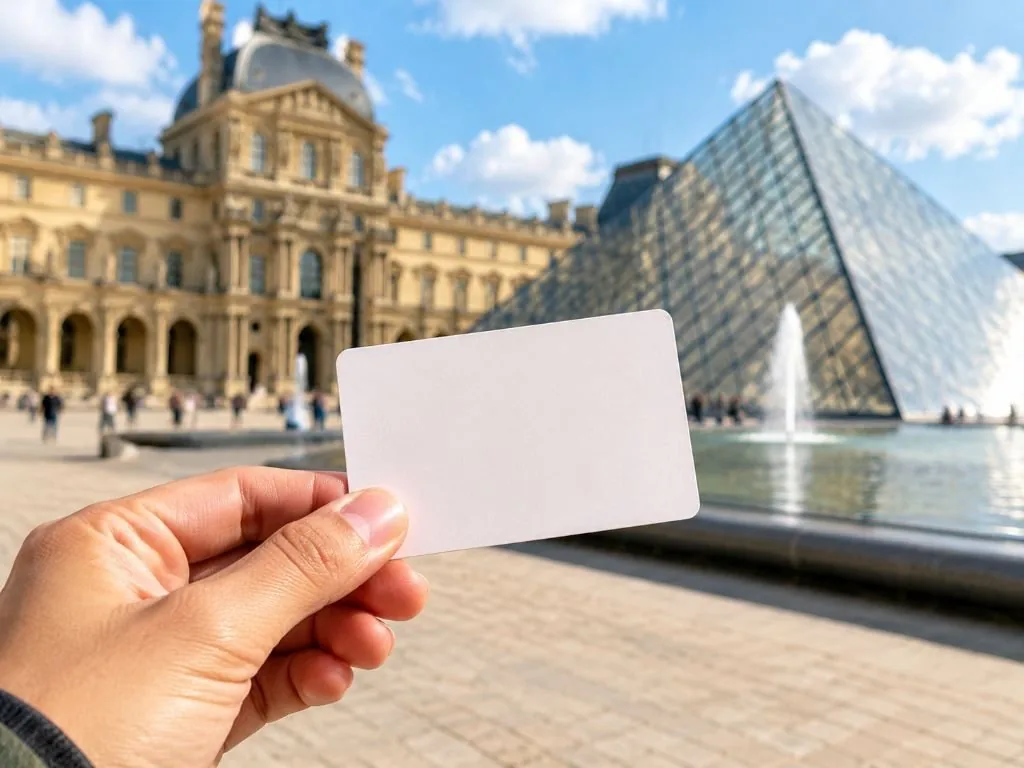
You choose a duration—2, 4, or 6 days—and the counter starts at the first entry into a museum. The days are consecutive and calendar-based: starting at 2 p.m. counts as a full day, which is the first thing to know. The pass is physical. You pick it up at an office about a ten-minute walk from the Louvre, open daily from 9 a.m. to 4 p.m., and several travellers report that collection is quick. It grants access to permanent collections, not temporary exhibitions, with priority entry where queues exist. Cancellation is free up to 24 hours in advance. One option adds a Seine river cruise.
Mandatory time slots
This is the point that explains the 4.1 rating, and it deserves careful reading. The pass does not replace time-slot reservations at five sites: the Louvre, the Orangerie, the Musée d'Art et d'Histoire du Judaïsme, the Hôtel de la Marine, and the Cité de l'Architecture. You must therefore go to each site’s website, select a time, and present the pass at the entrance. At the Louvre, slots fill up quickly in high season, and this is where most disappointments in reviews come from: people who bought the pass, arrived at the Louvre without a slot, and were not admitted. The pass is not to blame, but the information is often misunderstood. Audrey, an American traveller, sums it up in one sentence: book your time slots well in advance.
The under-26 rule
Visitors under 18, and EU nationals aged 18–25, enter national museums for free. For them, the pass is unnecessary. However, the time-slot rule still applies: a 22-year-old student must reserve their Louvre slot for free, just like everyone else. The cases of free admission valid at the Musée Moreau are detailed on the tickets page.
Who the pass is worth it for
I recommend it to only one category of visitors: those planning to see at least three or four major museums or monuments in two days, and who prefer not to buy each ticket separately. Beth, an American traveller, puts it this way: the pass saved her from booking each ticket one by one. Wojciech, from Poland, finds it especially useful for a first visit to Paris, as it simplifies the day. Steve, from Germany, sums it up: worth it if you want to see many sites. Karen L notes that the pass was accepted everywhere without question, and Catherine that collection near the Louvre went smoothly.
It is not worth it for a trip where you only visit one or two museums, for EU residents under 26, or for those primarily interested in temporary exhibitions. You must also accept structuring your schedule around consecutive days: many museums close on Mondays, the Musée Moreau closes on Tuesdays. A two-day pass taken on a Sunday and Monday therefore leaves few options on the second day, except precisely for Rue de La Rochefoucauld.
The Musée Moreau, the pass’s best-kept secret
On the list of covered sites, the Musée Gustave Moreau is the one my visitors never notice. Yet it is the perfect counterpoint to the pass’s major museums: a house, not a palace, where you enter without a time slot or queue, a fifteen-minute walk from the Opéra. I recommend visiting on Mondays, when the others are closed, or at the end of the day after the Louvre, when you no longer have the energy for a large museum but still have time left on the pass. One hour is enough; the how long page details the route, and the complete guide explains why the house is unique.
What the pass includes
Typically included
- The Musée Gustave Moreau and over 60 museums and monuments, including the Louvre, Orsay, the Orangerie, and the Arc de Triomphe
- Priority entry to venues with queues
- Permanent collections for 2, 4, or 6 consecutive days
- Free cancellation up to 24 hours in advance
Not included
- Temporary exhibitions
- Time slots for the Louvre, the Orangerie, the Musée d'Art et d'Histoire du Judaïsme, the Hôtel de la Marine, and the Cité de l'Architecture, which must be booked independently
- Transport
- The Seine cruise, offered as an optional extra
How to interpret the 4.1 rating
Out of 4,572 reviews, the average is lower than the ones for guided tours I compare. I read the negative comments: almost all mention the Louvre and the time-slot rule, not the pass itself. Positive reviews consistently say the opposite: easy collection, pass accepted everywhere, simplified day. Sandra, visiting from Mexico, calls it a very good resource for those interested in art, history, and architecture. My detailed opinion, including what frustrated me, is on the page reviews of the Paris Museum Pass.
Availability
If the pass does not match your stay, the other visits I compare—guided tour of the Musée d’Orsay, the Palais Garnier, and Montmartre—are grouped on the page all visits.
Frequently asked questions
Does the Paris Museum Pass include the Musée Gustave Moreau?
Yes. The museum is one of the covered venues, and no time slot needs to be booked for entry, unlike the Louvre. What the museum ticket covers beyond the pass is explained on the page tickets.
Are the pass days consecutive?
Yes, and calendar-based: a 2-day pass activated on a Saturday at 2 p.m. expires on Sunday evening. Start in the morning, therefore, and check the closing days: many museums close on Mondays, while the Musée Gustave Moreau closes on Tuesdays (see the opening hours).
Do I need to book a time slot at the Louvre with the pass?
Yes, it is mandatory, via the Louvre’s website, and well in advance during high season. The same applies to the Musée de l’Orangerie, the Musée d’Art et d’Histoire du Judaïsme, the Hôtel de la Marine, and the Cité de l’Architecture. This is the main source of unpleasant surprises in the reviews.
Does a 22-year-old student need the pass?
If they are an EU national, no: national museums are free for them, as they are for all under-18s. They must still book a time slot where required. Other cases of free admission are listed on the page is it free?.